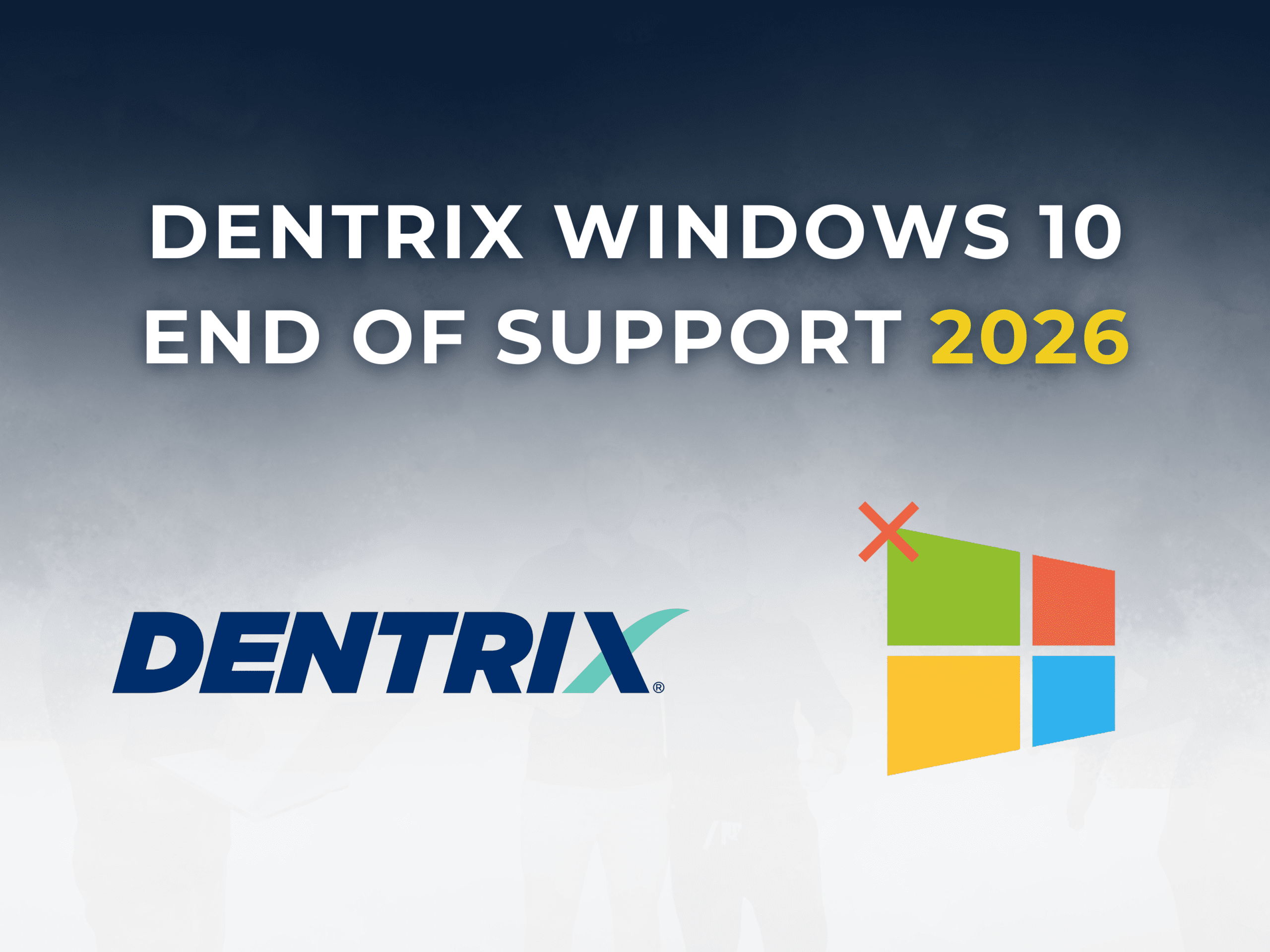
Henry Schein One will stop supporting Dentrix on Windows 10 after June 30, 2026. Any workstation still running Windows 10 after that date will be unsupported.
Unsupported does not mean Dentrix stops working immediately. It means if something breaks and your workstation is on Windows 10, Henry Schein support cannot help you. And because Microsoft ended Windows 10 security updates in October 2025, an unsupported workstation is also a HIPAA exposure.
Deadline
June
30
2026
Henry Schein One drops Dentrix support for Windows 10 after this date.
Any workstation still running Windows 10 after June 30, 2026 will be unsupported by the vendor and running an OS with no active security patches. That combination is a HIPAA compliance risk.
⚠️ After June 30, 2026, Henry Schein will no longer support installing or running Dentrix on Windows 10.
A Windows 10 workstation running Dentrix after that date is both unsupported by the vendor and running an operating system with no active security patches. That combination is a compliance risk.
The Dentrix Windows 11 Compliance Checklist
Go through each workstation in your practice. Every item needs to pass before you upgrade to Windows 11 and confirm Dentrix compatibility.
0 of 13 passed
Requirement
Pass
Fail
Windows 11 (64-bit) installed on workstation
CPU supports Windows 11: 8th gen Intel Core or AMD Ryzen 2000 series or newer
TPM 2.0 chip present and enabled in BIOS
Secure Boot enabled in BIOS settings
UEFI firmware (not legacy BIOS)
Minimum 8 GB RAM (16 GB recommended)
Minimum 20 GB free storage on SSD or NVMe
1 GHz processor with 2 or more cores
DirectX 12 compatible graphics card
1280 x 1024 minimum display resolution
Internet access for Dentrix updates and eServices
Dentrix program directory excluded from antivirus scans
Tested and confirmed Dentrix opens and functions correctly after upgrade
This workstation is ready to upgrade.
All 13 requirements passed. This machine can proceed with the Windows 11 upgrade and Dentrix reinstall. Hit Reset to run through the next workstation.
These need to be resolved before this machine can upgrade to Windows 11. Your IT provider needs to assess each failing item before you proceed.
Mark every item before you get a final result. Some items may require your IT provider to check BIOS settings or run a system scan.
The Two Items Most Practices Miss
Most Common Blocker
TPM 2.0
TPM stands for Trusted Platform Module. It is a security chip required by Windows 11. Many computers built before 2018 either do not have it or have it disabled in BIOS. This is the single most common reason a workstation cannot upgrade to Windows 11, even if everything else looks fine.
Your IT provider checks this with a simple system scan. If TPM 2.0 is present but disabled, enabling it in BIOS is a quick fix. If the chip does not exist, the workstation needs to be replaced.
Second Most Common
CPU Generation
Windows 11 requires an 8th generation Intel Core processor or AMD Ryzen 2000 series or newer. Workstations with older CPUs, even if they feel fast, will not run Windows 11 natively.
This catches a lot of practices that have older high-spec machines that still perform well for daily tasks but cannot make the jump to Windows 11 regardless of other specs.
June 30 is closer than it looks. The earlier you start, the more time you have to replace machines that cannot upgrade.
Dentrix continues running on Windows 10 workstations after June 30, but Henry Schein will not support issues on those machines.
Consequence
You are on your own if an update breaks something
If a Dentrix update breaks something on a Windows 10 workstation, Henry Schein support cannot help you fix it.
Consequence
No security patches on a live patient data machine
Windows 10 continues to run without security patches after October 2025, increasing ransomware and breach exposure on machines storing patient data.
Consequence
HIPAA audit exposure to fines
If a HIPAA audit identifies unpatched operating systems as a security gap, your practice is exposed to fines regardless of whether a breach occurred.
Frequently Asked Questions
Technically yes, Dentrix will not shut off. But you lose vendor support for any issues on Windows 10 machines, and you are running an unpatched OS with live patient data on it. For HIPAA purposes that is a gap that shows up in a risk assessment.
30 to 60 minutes per machine if it qualifies. Testing Dentrix after each upgrade adds another 15 to 20 minutes. Plan for this across all workstations well before June 30.
They need to be replaced. The sooner you identify these, the more lead time you have to source and set up replacements before the deadline. Waiting until June means compressed timelines and potential rushed installs.
Do Not Wait Until June 29
Ekim IT Solutions is handling Windows 11 compliance upgrades for Dentrix practices across New England and New York now, with remote support available across the United States.
Every workstation you delay is a workstation at risk after June 30. Get your assessment done now while there is still time to act on it.

Ezra Angelo