
Cloud vs. On-Premise Dental IT: Which Is Right for You?
-
Ezra Angelo
- • February 19, 2026
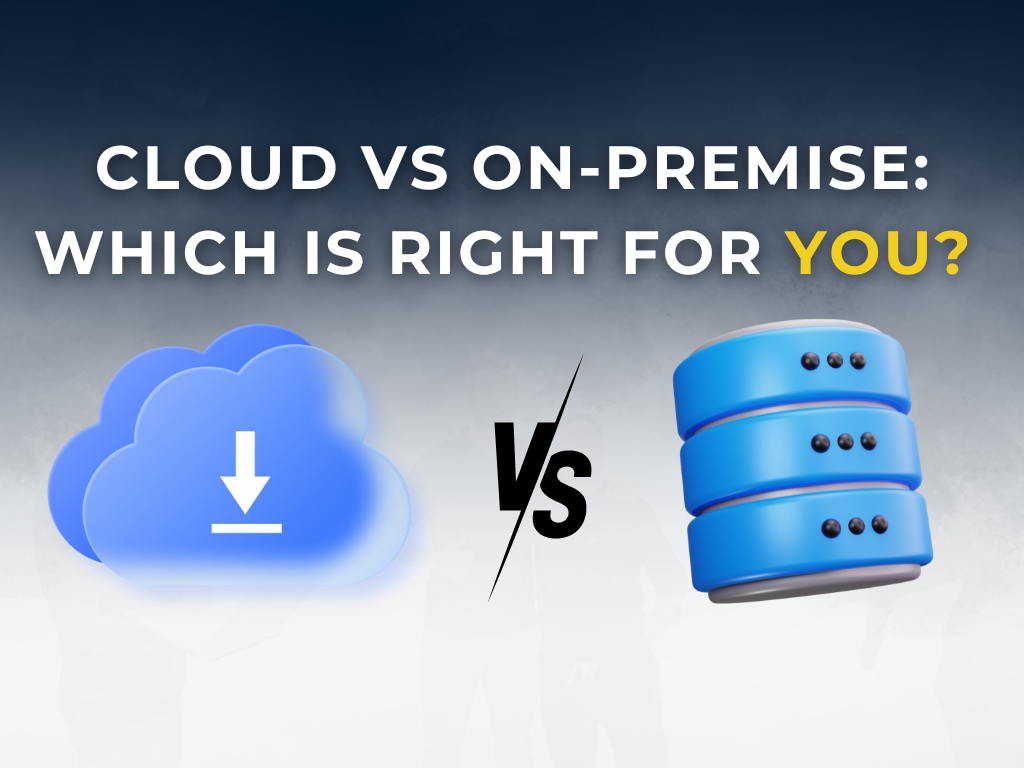
Cloud or server. Every dental practice has to choose. And the right answer is not the same for every practice.
Here is a plain-language breakdown of what each option actually means for your cost, performance, data, and compliance so you can make the right call for your specific situation.
The biggest mistake dental practices make is choosing based on upfront cost alone.
Cloud looks cheaper at first because there is no server to buy. On-premise looks cheaper later because there is no ongoing subscription. Neither is always the better deal. It depends on your practice.
Side by Side
| Cloud-Based | On-Premise (Server) | |
|---|---|---|
| Upfront cost | Low. No server hardware to buy. | Higher. Server purchase required. |
| Monthly cost | Subscription fee to vendor. | IT support and maintenance. |
| Data ownership | Vendor controls your data. | You own and control your data. |
| Internet dependency | Yes. Outage means no access. | No. Works without internet. |
| IT maintenance | Minimal. Vendor handles updates. | Ongoing. Server needs management. |
| Remote access | Yes. Works from any device. | Requires VPN setup. |
| HIPAA compliance | Platform handles some. Documentation still needed. | IT provider handles all documentation. |
| Performance | Depends on internet speed. | Fast. Runs on your local network. |
| Best for | New practices, multi-location, low IT overhead. | Established practices, full data control. |
The Case for Cloud-Based Dental IT
Cloud-based dental IT means your practice management software, imaging, and data all live on external servers managed by your vendor. You access everything through a browser or app.
No server to buy, maintain, or eventually replace. Lower upfront cost and less hardware overhead.
Automatic software updates handled by the vendor. Your IT team does not need to manage patches or version upgrades.
Staff can access the system remotely from any device with internet access. Useful for multi-location practices and remote administrative work.
Scales easily as your practice grows without adding physical infrastructure.
The tradeoff: your internet connection becomes critical infrastructure. If it goes down, so does your access to patient records. Most cloud-based practices set up a backup internet connection for this reason.
The Case for On-Premise Dental IT
On-premise means your data lives on a server inside your practice. Your workstations connect to it through your local network. Everything runs locally, independent of internet speed.
Fast performance. Data travels over your local network, not the internet. Imaging files load quickly regardless of your ISP.
Full data ownership and control. No vendor has access to your patient records. Your data stays in your building.
No dependency on internet uptime. Your practice can keep running during an internet outage.
Better for practices running server-dependent software like standard Dentrix or Eaglesoft.
The tradeoff: a server requires ongoing maintenance, security patching, backup management, and eventual replacement. Without a dental IT provider managing it, server-based setups create more risk than cloud.
Not sure whether cloud or on-premise is right for your practice? We evaluate your software, size, and growth plans and recommend the setup that actually fits.
Schedule a Fit Call →Ekim IT Solutions supports cloud and on-premise dental IT across New England, New York, and the US.
On-premise server setup and HIPAA compliance for Dentrix and Eaglesoft.
Open Dental private cloud deployment without vendor lock-in.
Network management for cloud-dependent practices.
What Your Software Choice Determines
Your practice management software often makes this decision for you.
Dentrix or Eaglesoft
You are on-premise by default. Dentrix Ascend and Eaglesoft have cloud options but with different feature sets.
Curve Dental
You are cloud-based. There is no on-premise option.
Open Dental
You can choose either. Open Dental supports both local server and private cloud deployment, making it the most flexible option in 2026.
The Hybrid Option
Some practices run a hybrid setup. Practice management software on the cloud, imaging data stored locally. Or an on-premise server with cloud backup for disaster recovery.
Hybrid setups require careful configuration to work well. Your IT provider needs to design the architecture intentionally, not piece it together reactively.
Frequently Asked Questions
Ekim IT Solutions works exclusively with dental practices. We serve New England and New York with on-site support and dental practices nationwide with remote support. We evaluate cloud vs. on-premise options based on your specific software, practice size, and budget so you get a recommendation that actually fits, not a generic answer.
-
- • February 19, 2026


